AI UGC ads that don't scream 'AI UGC ad'
The tells are always the same handful of things. Fix those and the format works. Ignore them and you have paid to look cheap at scale.
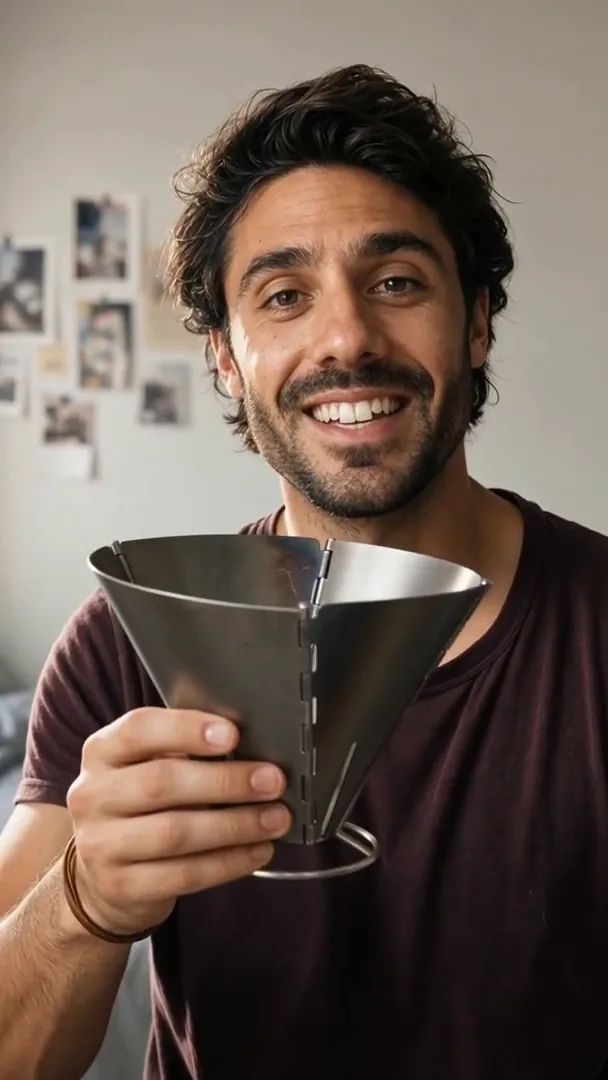
What is an AI UGC ad?
A short, social-first video ad made to look like a real person filming themselves with a product — the format carrying most paid social right now.
Made with AI it is fast and repeatable. Made carelessly it is instantly recognisable, and being recognised is the whole failure, because the format only works while it reads as a person rather than as an ad.
What gives them away?
Five things, nearly every time.
Hands that do not hold the product like an object with weight. A room too clean and too symmetrical to be anyone's kitchen. Lighting with no window in it. A voice that lands every syllable perfectly, with no breath and no hesitation. And the big one — the product changes slightly between shots, which no real phone video has ever done.
Why is the product tell the worst one?
Because it is the one the viewer cannot name and still reacts to.
They will not think 'the label moved'. They will think something is off, and scroll. You lose the ad without ever getting the feedback that would let you fix it, which is why this tell survives so long in so many accounts.
How do you fix the physical tells?
Ask for imperfection on purpose. An off-centre frame. A room with something in the background that should not be tidy. Light coming from one side because windows exist.
The instinct is to ask for polish, and polish is exactly what breaks the format. You are not making an advert that looks like an advert.
How do you fix the product tell?
Give the system the real product to work from rather than a description of it, so it stays the same object all the way through the cut.
This is the single highest-leverage fix and most people skip it, because describing is faster than uploading. It is faster once, and slower every time after.
How do you fix the voice?
Give it a real one to work from, and let it be imperfect. A voice that never stumbles reads as synthetic even when everything else is right.
Write for speech, not for text. Read your script out loud before you use it. If you would not say it to a friend, it will not sound like someone saying it to a friend.
Do you need one good ad or volume?
Both, and in that order. The format rewards volume — variations, hooks, cutdowns, crops for each placement — but volume of the wrong thing just buys a bigger sample of a bad ad.
Get one right. Then ask for the variations from the same brief, so they are genuinely siblings rather than six separate attempts that happen to feature the same product.
What varies well and what does not?
Hooks vary well. Openings, first lines, the order of the beats — those are cheap to test and genuinely differ in performance.
The person and the product should not vary. A campaign where the creator changes between ads reads as four strangers rather than one recommendation, and recommendation is the entire mechanism the format runs on.
Where does this get easy?
When the product, the person and the room are all things your workspace already knows, a new ad is a sentence.
'Same creator, same pouch, kitchen light, fifteen seconds, vertical.' The consistency you were fighting for stops being the work and becomes the starting condition. That is the point where volume stops being risky.
What should you disclose?
Whatever your platform and your market require, and then a little more if you are unsure.
The rules differ by country and they are moving. Treat disclosure as a design constraint from the first frame rather than a label added at the end, and it will not cost you anything creatively.
How many variations should a test actually have?
Enough to separate signal from noise on your traffic, which for most accounts means a handful rather than a hundred.
The volume that helps is variation on one axis at a time. The volume that wastes money is fifty ads that differ in every respect, where a winner teaches you nothing you can reuse.
Start with three hooks against one body. You will learn more from that than from thirty of everything.
What does a good script look like?
Short lines, one idea each, written to be said rather than read.
Open on the problem in the viewer's words, not yours. Reach the product early enough that the viewer knows what the ad is. End on one action, stated once.
Read it out loud. Anything you stumble over is a line a synthesised voice will make sound stranger, not smoother.
How do you keep a series feeling like one creator?
Bind the same person, the same room and the same product across the whole series, and vary only the script and the framing.
This is the difference between a creator whose recommendations accumulate and four strangers who each mention a product once. The format's entire persuasive mechanism is familiarity, and familiarity cannot survive a cast change every ad.