Stop tool-hopping: one brief, every format
Most teams run six tools to ship one campaign. The work does not live in the tools — it dies in the seams between them. Here is what that actually costs.
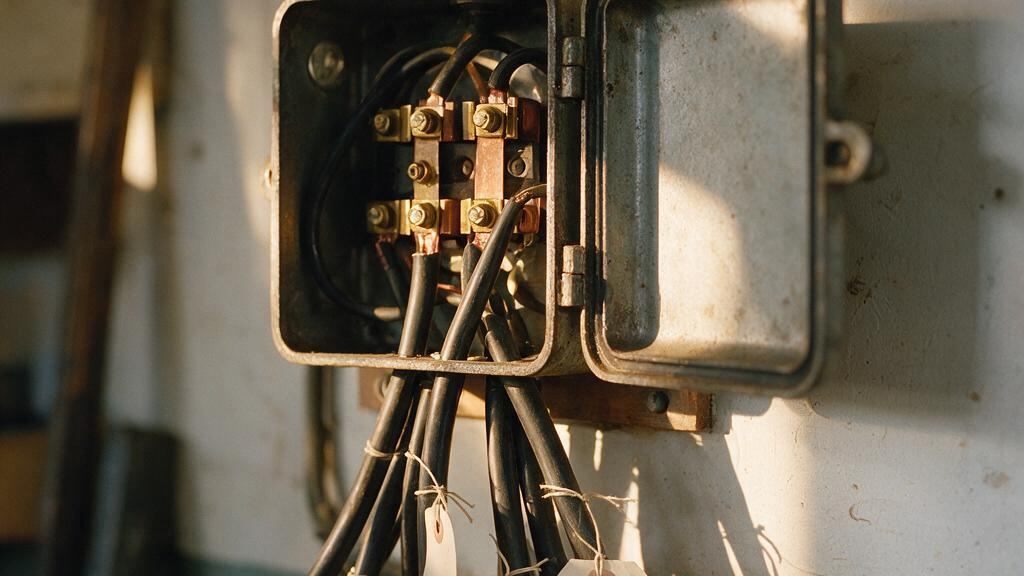
What does an AI creative stack usually look like?
Count yours honestly. One tool for product stills. One for lifestyle imagery. One for video. One for voice-over. One for upscaling. One for the copy. A stock library for the bits nobody could make. And a shared drive holding the brand guidelines that none of those tools can read.
Every one of those is a separate login, a separate bill, a separate export format, a separate idea of what your brand looks like, and a separate place for the work to stop while somebody waits on somebody else. Nobody chose this. It accumulated, one good tool at a time, and each addition was individually justified.
Why is the stack the problem rather than the tools?
Because nothing carries between them. You describe your product to the stills tool. Then you describe it again to the video tool, in different words, because that tool takes a different kind of instruction. Then again to the voice tool. Each one hears a slightly different brief and answers with a slightly different brand.
Nobody planned that drift and nobody can point at where it happened. It is just what six systems do when each of them gets about eighty per cent of the story and none of them can compare notes. The output is not wrong anywhere in particular. It is wrong everywhere slightly, which is much harder to fix and much easier to ship by accident.
What does the stack actually cost in hours?
The generating is the fast part. It was always going to be the fast part. The slow part is everything around it: the download, the rename, the re-upload, the re-describing, the version that got approved in a chat thread and then lost, the crop that had to be redone because the square placement cut the logo in half.
Teams tell us that stitching work is most of the day. It never appears on any invoice, no tool vendor is accountable for it, and it is invisible in every side-by-side comparison of features and prices. That is exactly why it never gets fixed — it belongs to nobody.
Why do the seams get worse as you scale?
A single asset can survive a messy process. A campaign cannot. The moment you need the same product, the same person and the same tone across ten stills, three cutdowns, four crops and a voice-over, every seam you were tolerating multiplies.
This is the point where most teams hire someone to manage the tools rather than make the work. It is a rational response to the wrong problem. You do not need a manager for six systems that cannot talk to each other. You need them to stop being six systems.
What replaces the stack?
One brief. You describe the outcome you want in plain words — what it is for, who it is talking to, what has to be true about it — and you attach what you already own. The product shots. The brand guidelines. A voice clip. A reference sheet somebody made two years ago.
Then you get the finished set back. Stills, motion, sound, and the different shapes you will actually need, all from one understanding of one brief. You never pick a model. You never pick a tool. That choosing was never creative work — it was a job the tools outsourced back to you, and you have been doing it unpaid.
Does one brief mean less control?
It is the opposite, and this is the part people get wrong. Picking a model is not control. It is guessing, on incomplete information, about something that changes every few weeks. Control is being able to say what the work has to achieve and having that hold across every piece of it.
You steer with words, at any point, in the same place the work is happening. Colder. More premium. Also give me a vertical one. That is a director's kind of control, not a technician's.
How do you know the price before you commit?
The price is on screen before anything runs, and nothing runs until you approve it. That sounds obvious and it is not the norm: most tools charge per attempt, which means the price of a finished asset is unknowable until after you have paid it several times.
If you stop a production part-way, what has already been sent out is charged and everything else comes straight back to your balance. You are never billed for a decision you did not make.
What about the work you have already made?
It comes with you, and it should. Your existing product photography is the best possible reference for your product. Old ads that performed are the best possible brief for the next one. Your guidelines are a set of rules somebody paid a lot for.
A tool that cannot read any of that is asking you to start from zero every time, and then charging you for the privilege of describing your own brand back to it.
Who is this actually for?
Brands with more channels than people. Agencies producing at volume for clients who all look different. Studios who want the boring half of production to stop eating the interesting half.
It is not for someone who wants to sit and play with a model. That is a real and enjoyable thing to want, and there are excellent tools for it. This is for people who have a deadline and a brand to protect.
How would you test this yourself?
Take a brief you have already shipped — one where you know what good looked like and how long it took. Run it end to end without switching tools. Count two things: what you would genuinely hand a client, and how many minutes you spent on anything that was not a creative decision.
That second number is the one that moves. It is also the one nobody measures, which is why the category keeps competing on the first.
What does a good brief look like written out?
It has four parts and none of them is a camera setting. What the thing is for. Who it is talking to. What must be true about it. What you are handing over.
'Six product stills for the autumn refill launch, for the shop grid and paid social, warm and editorial rather than clinical, label readable at thumbnail size, product is the amber pouch in the library.' That is a brief a person could act on, which is the only test worth applying.
Compare it with 'photorealistic product photography, studio lighting, 8k, highly detailed'. The second reads like a specification and contains no information about your business at all.
What should you stop putting in briefs?
Quality adjectives. 'High quality', 'professional', 'detailed', 'award-winning' — none of these narrow anything, because no brief has ever asked for the opposite.
Model names and settings, for the same reason: you are guessing about something that changes monthly, and a guess in the brief becomes a constraint on the work.
And anything the workspace already knows. If you find yourself describing your own product, that description belongs in the library once rather than in every brief forever.
How does this fit with the people you already have?
It moves where their time goes rather than replacing them, and the direction it moves is the one everybody says they want.
A designer stops exporting eleven crops and starts deciding whether the idea works. A producer stops chasing versions and starts scoping. A creative director reviews on the frame instead of in a thread. The work that disappears is the work nobody was proud of.
The teams that get least from this are the ones that keep the old process running alongside — briefing here, reviewing there, storing somewhere else. The seams come straight back.
What can it not do?
It cannot decide what your brand should be. It cannot know that this quarter's campaign is about trust rather than speed unless somebody says so. It cannot tell you the idea is weak.
Strategy, judgement and taste stay entirely with you. What changes is that you spend your day on those instead of on file management, and that the distance between a decision and seeing it is minutes rather than days.
Anyone selling you the other thing is selling you something that does not exist yet.